How Does Your Garden Grow?
by Sagdrina Brown Jalal, Founder of The SageD Collective
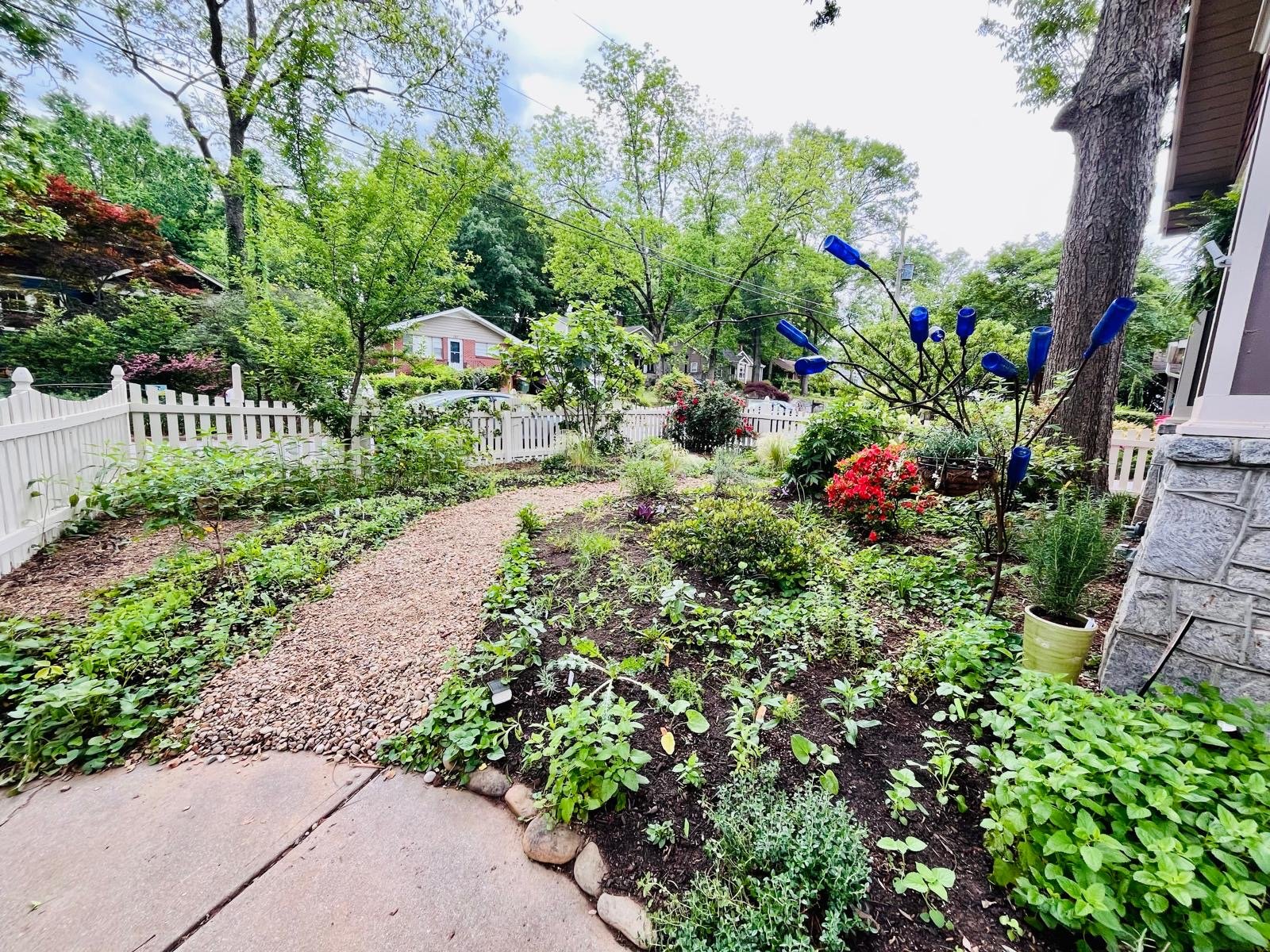
The first thing you'll encounter when you arrive at Meena's Manor isn't the house. It's the garden. That was never an accident. Long before conversations begin around the dining table or movement fills the Pilates studio, the garden quietly introduces what this place is about. It reminds us that everything worth building begins with tending: relationships, community, and ourselves.
The garden wasn't part of an original master plan. In many ways, it became the plan.
After more than a decade spent working alongside Georgia's farmers markets, the convergence of a global pandemic and a deeply personal shift toward healing changed the way I thought about community and the role food plays within it.
For years, my work centered on supporting farmers markets across Georgia. I had the privilege of learning from growers, food makers, market managers, and community leaders who understood something our culture often forgets: food has always been more than nourishment. It is memory. It is culture. It is identity. It is one of the oldest ways communities care for one another.
Like many others, I watched organizations navigate shrinking resources and growing uncertainty. Yet the farmers markets I worked alongside continued to remind me of something simple. Families still needed to eat. Farmers still needed to grow. Communities still needed places to gather. Some of the most important work wasn't happening in conference rooms. It was happening in the soil.
The garden began as a personal experiment in stewardship. Not stewardship through ownership, but through responsibility. I knew the land could support far more than me and my family. It could nourish relationships, create opportunities for learning, and become a place where people felt welcomed long before they ever walked through the front door.
That's why the garden is the first thing people encounter when they arrive. It quietly tells the story of this place before a single word is spoken.
Looking ahead, Meena's Manor will become home to a community garden project designed to extend that vision. The Garden Project will create opportunities for hands-on gardening, nutrition education, medicinal herb workshops, seasonal cleanses, and shared learning experiences. Whether someone arrives with years of gardening experience or none at all, the goal is simple: to create multiple ways for people to participate, learn, and grow together.
Anyone who has spent time in a garden understands that it changes more than the landscape. It asks us to slow down, notice what needs tending, and accept that some things cannot be rushed. Gardens also strengthen communities by creating places where knowledge is shared across generations, neighbors become collaborators, and healing often begins with something as simple as planting a seed together.
Long before wellness became an industry, our grandmothers understood that many of the first remedies came from the garden. Across cultures, herbs have carried generations of knowledge about caring for the body and spirit. Through medicinal gardening, we hope to return that knowledge to the community while honoring traditions that have sustained families for centuries.
At Meena's Manor, the garden is both metaphor and method. It reflects my own journey toward healing, transition, and renewal. More importantly, it reflects what I hope this space can become for others: a place where learning feels accessible, wellness feels communal, food becomes a teacher, and people discover that growth rarely happens in isolation.
As the Garden Project grows, so will the community around it. People will plant, harvest, cook, learn, and share. They'll bring their own stories, traditions, and hopes, each one adding something new to the soil we tend together.
I've come to believe that every community needs a place where people can grow something together. Sometimes that's vegetables. Sometimes it's confidence. Sometimes it's friendships that outlast the harvest.
My hope is that Meena's Manor becomes that kind of place, where people leave with more than they came for and where tending the earth reminds us how to care for one another.